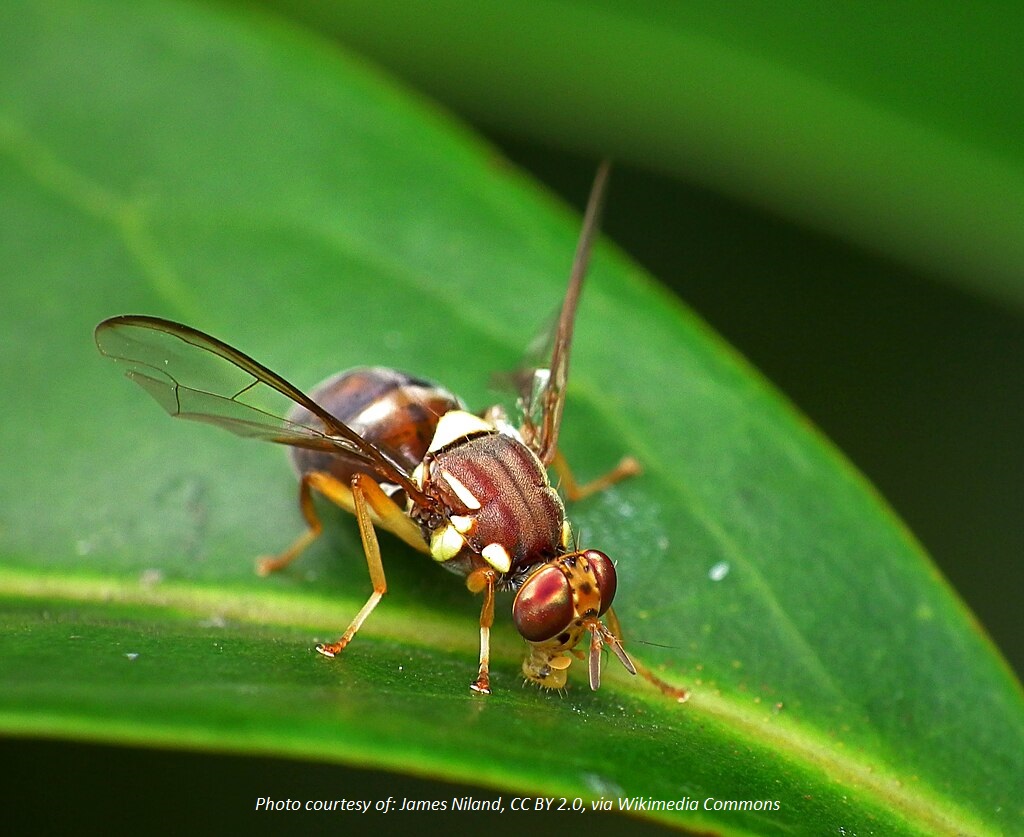
Despite being ‘fruit fly’ free for so long, Koraleigh succumbed to the pest around 2018. Three years of La Nina from 2020 to 2022, saw a rapid increase in numbers of Qfly in our area, affecting home orchards as well as commercial growers.
BKIT has been actively involved in assisting locals to trap Qfly, monitor numbers, and provide management tools to reduce Qfly numbers. If you require assistance, or have any questions you can contact the BKIT office, or check out our Fruit Fly blog.
Did you know?
One female fruit fly, that survives winter, can be responsible for up to 1 million fruit fly by the following winter!
Fruit Fly can survive for around 4 months over winter, but only around 8 weeks over summer.
Fruit Flies survive over winter by sheltering in evergreen trees like avocados, loquats, citrus and olives.
A study in Victoria showed that 10% of fruit flies that hatched in May were still alive at the end of September, with the last dying in mid-December.
Fruit flies cannot fly at temperatures below 14-15oC, and will begin to mate when temperatures at dusk are around 16oC.
Fruit fly rarely survive as pupae (in the ground) over winter.
Fruit fly larvae do not have to get into soil to pupate.
Fruit Flies are a tropical pest and do not like hot, dry summers. These conditions can help to reduce numbers of adult Fruit Fly.